The Archives

The Archives

Past projects and older news from Widget KC.

← Back to front page
Three fall 3D printing projects including a vampire teeth candy bowl, coffee cup holder, and interchangeable lantern
Sep 27, 2026

Three Fall 3D Printing Projects, Because Apparently I Needed a Seasonal Lantern

Fall might be my favorite excuse to keep a 3D printer busy. Halloween gives me permission to make giant vampire teeth, cooler weather makes hot drinks suddenly relevant, and seasonal decorating creates problems nobody actually asked me to solve. So I ended up with three very different projects: a candy bowl, a safer coffee cup holder for Grandma, and a lantern that somehow became a clock. None of these required quite this much effort. That has historically not stopped me.
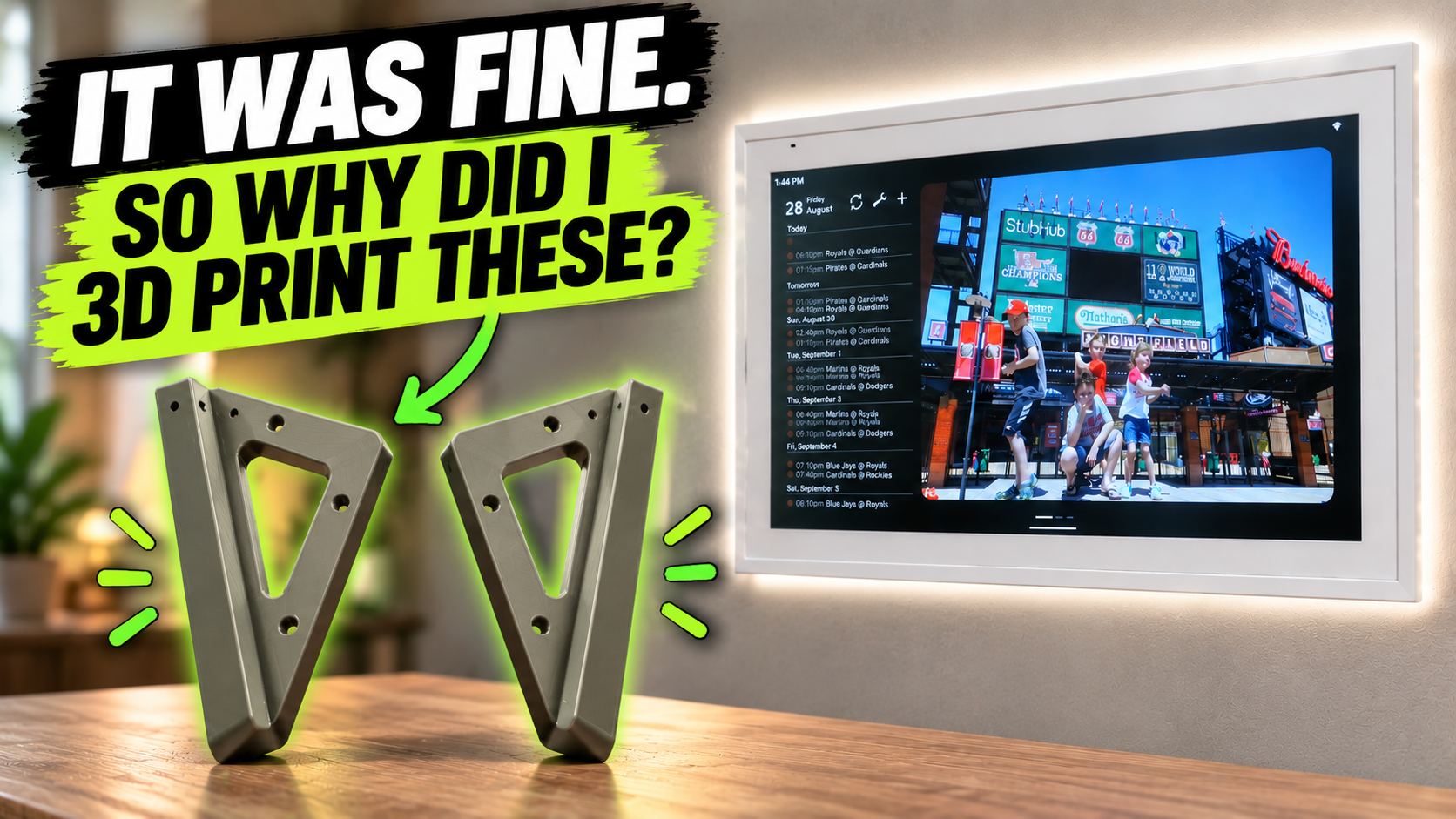
Apolosign digital family calendar mounted flush to a wall with its power cable and recessed electrical box hidden behind it
Sep 12, 2026

Hiding the Wires on Our Apolosign Digital Calendar

Our family's digital calendar already came with a perfectly functional wall mount. Naturally, I designed another one. The problem was not that the factory mount was bad. It was that after installing a recessed electrical outlet behind our 21.5-inch Apolosign Digital Calendar, there was a tiny chance that part of the outlet box might still be visible from the side. Would most people notice? Probably not. Unfortunately, I had already noticed. And I own a 3D printer so here we are. The result was a parametric 3D-printed adapter that mounts the factory bracket directly over the recessed box, completely hides the outlet and power cable, and preserves the original magnetic mounting system.

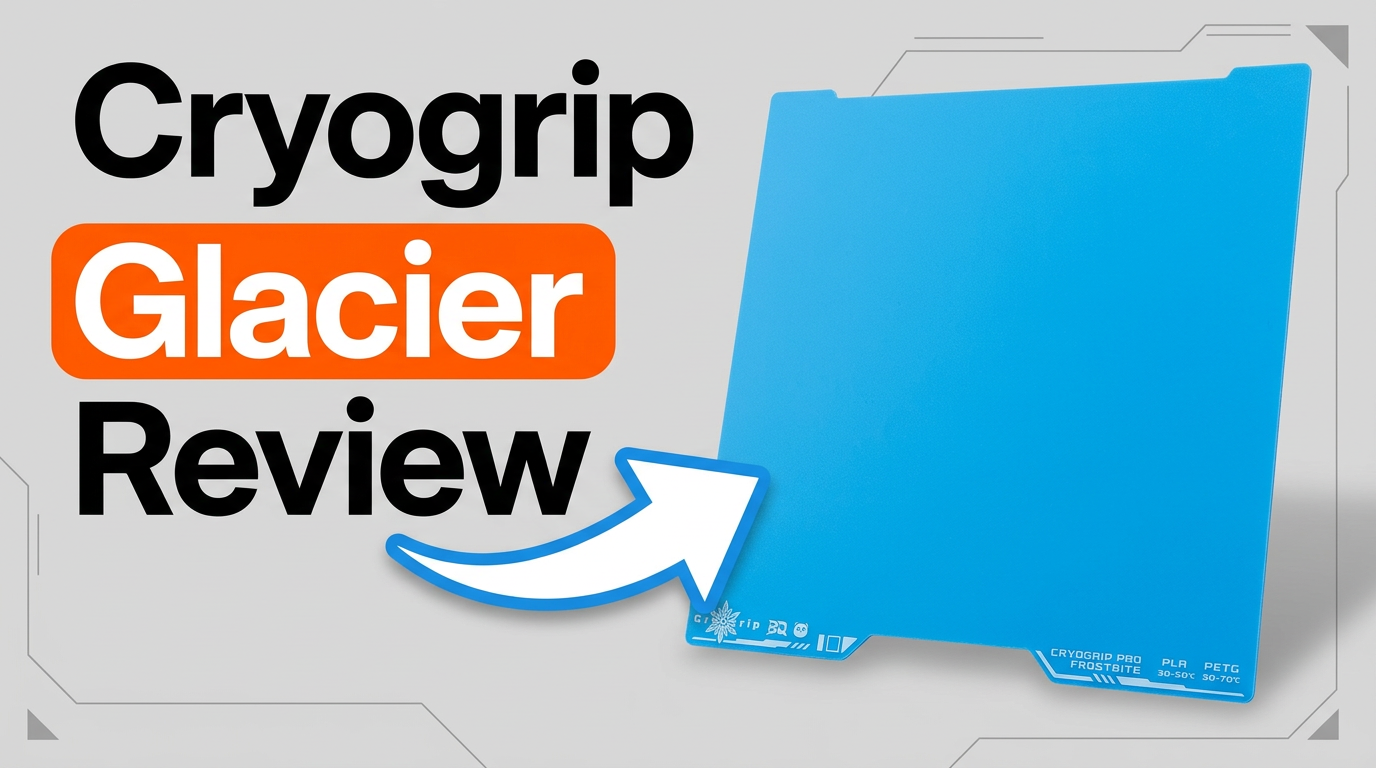
BIQU CryoGrip Pro Glacier build plate
Aug 22, 2026

CryoGrip Pro Glacier Review

When BIQU sent me their CryoGrip Pro Frostbite and Glacier build plates to test on my Bambu Lab H2D, I wasn't looking for a new favorite build plate. My H2D already had a perfectly good build plate. But after several dozen prints, something unexpected happened: I kept reaching for the BIQU Glacier plate instead. The reason was not just lower bed temperatures or energy savings; it was the combination of reliable adhesion, easy print removal, and the matte surface finish it produced on PLA.

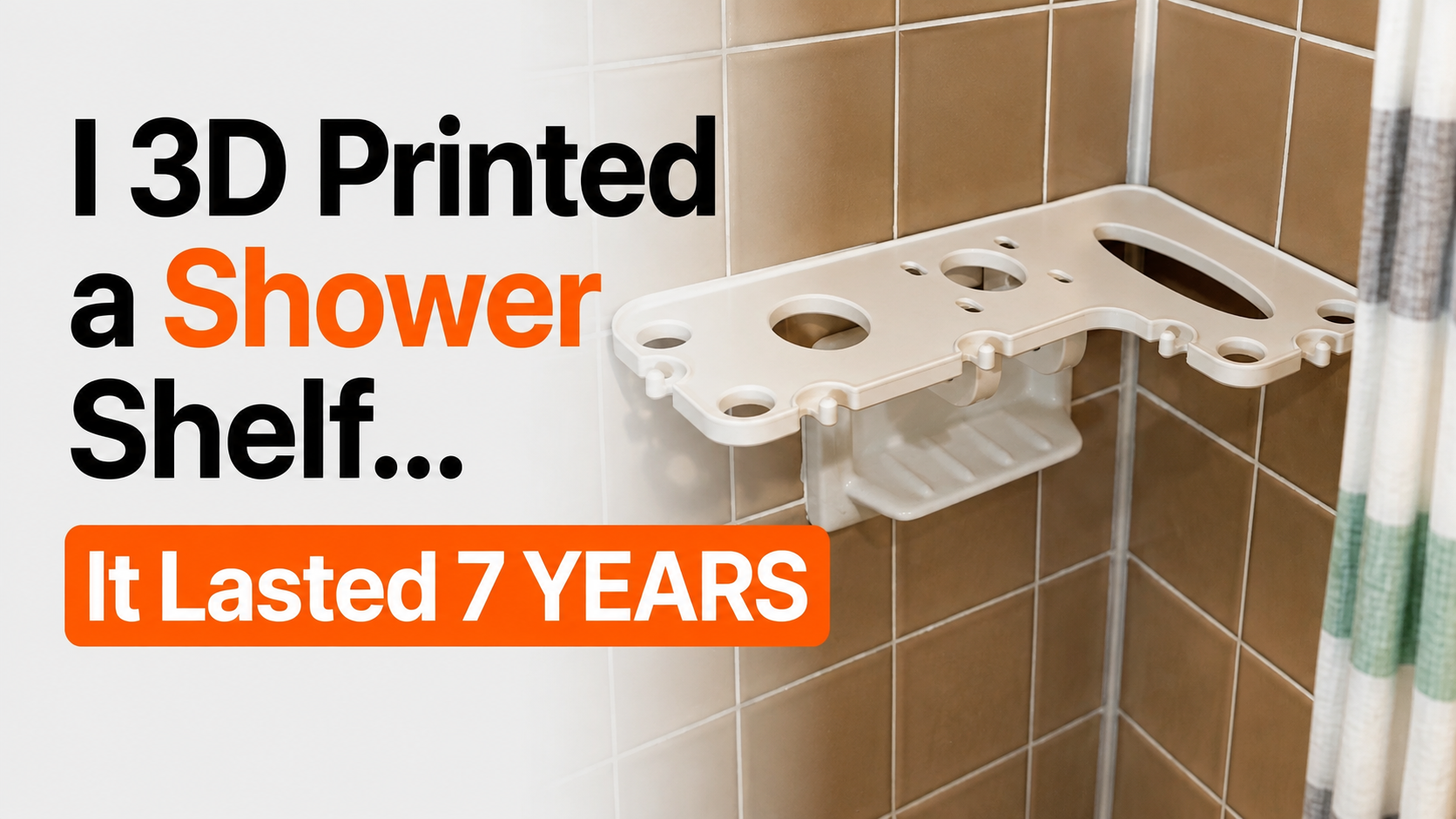
Custom 3D printed corner shower shelf mounted to an existing shower handhold
Aug 9, 2026

I 3D Printed a Shower Shelf That Lasted 7 Years

Over the years, I bought several shower organizers, and each one found its own creative way to disappoint me. Some made the shower feel like an airplane bathroom. Others slowly migrated down the shower head, while suction cups continued their long-running campaign against the concept of reliability. Eventually, the shower floor became our storage system, which technically worked in the same way a kitchen floor could technically be a pantry. There was already a sturdy handhold attached to the wall, though, and that seemed like enough justification to spend a weekend designing a better answer. I designed and 3D printed a custom corner shelf that clamps to the existing handhold without drilling into the wall, and after more than seven years and thousands of showers, it is still doing the job.

Comparing TPU 90A and TPU 68D in real-world 3D printed applications
Feb 5, 2026

TPU 90A vs TPU 68D (TPU for AMS)

TPU 68D and TPU 90A are both flexible, but they are not remotely interchangeable. One is easier to print and stiffer in service, while the other is softer, stretchier, and much better at grip, comfort, and sealing. TPU 68D, sold by Bambu Lab as TPU for AMS, is faster, cleaner, and more manageable in an automated system; TPU 90A behaves more like a rubber-like material in real use and is better for grip, seals, and comfort. The right answer depends on the job, not just the material label.

Flexible TPU being printed on a Bambu Lab H2 series 3D printer
Jan 16, 2026

Printing TPU Reliably on a Bambu Lab H2 Series Printer

TPU is one of those materials that makes a 3D printer considerably more useful and slightly more argumentative. It can produce soft, flexible parts that simply are not possible with ordinary rigid filament, but getting it from the spool to the nozzle deserves some attention. Moisture, excessive friction, old filament hiding in the nozzle, and even the build plate can all cause trouble. The H2 series gives us a few different ways to handle it, depending on exactly which TPU we are using. Once the filament path is sorted out, the actual printing is refreshingly uneventful.

Multi-material 3D printed coaster, project box, and sunglasses demonstrating different plastic combinations
Nov 27, 2025

Multi-Material 3D Printing: What Actually Sticks Together?

Multi-material 3D printing sounds simple enough: load several filaments and let the printer sort out the details. Unfortunately, the plastics have opinions. PLA and PETG barely want to acknowledge each other, flexible TPU is only useful if it is actually flexible, and dedicated support material is not necessarily the best support material. I tested those problems across a coaster, a water-resistant electronics box, and a pair of print-in-place sunglasses. Somewhere along the way, a slicer setting saved me from modeling tiny retention features by hand, which would have been useful information several hours earlier. The tests showed that material compatibility matters as much as color or convenience: mechanical interlocking solved weak PLA/PETG and PLA/TPU interfaces, while ASA proved to be an effective and economical support material for PAHT-CF.